Silagen Arnica-Bromelain Complex and Industrial Bromelain for Meat Tenderization
Industrial bromelain sourcing guide for meat tenderization: dosage, pH, temperature, COA/TDS/SDS, QC, pilot trials, and cost-in-use.
A practical B2B guide for buyers comparing arnica-bromelain search terms with food-grade bromelain enzyme specifications for controlled meat tenderization.
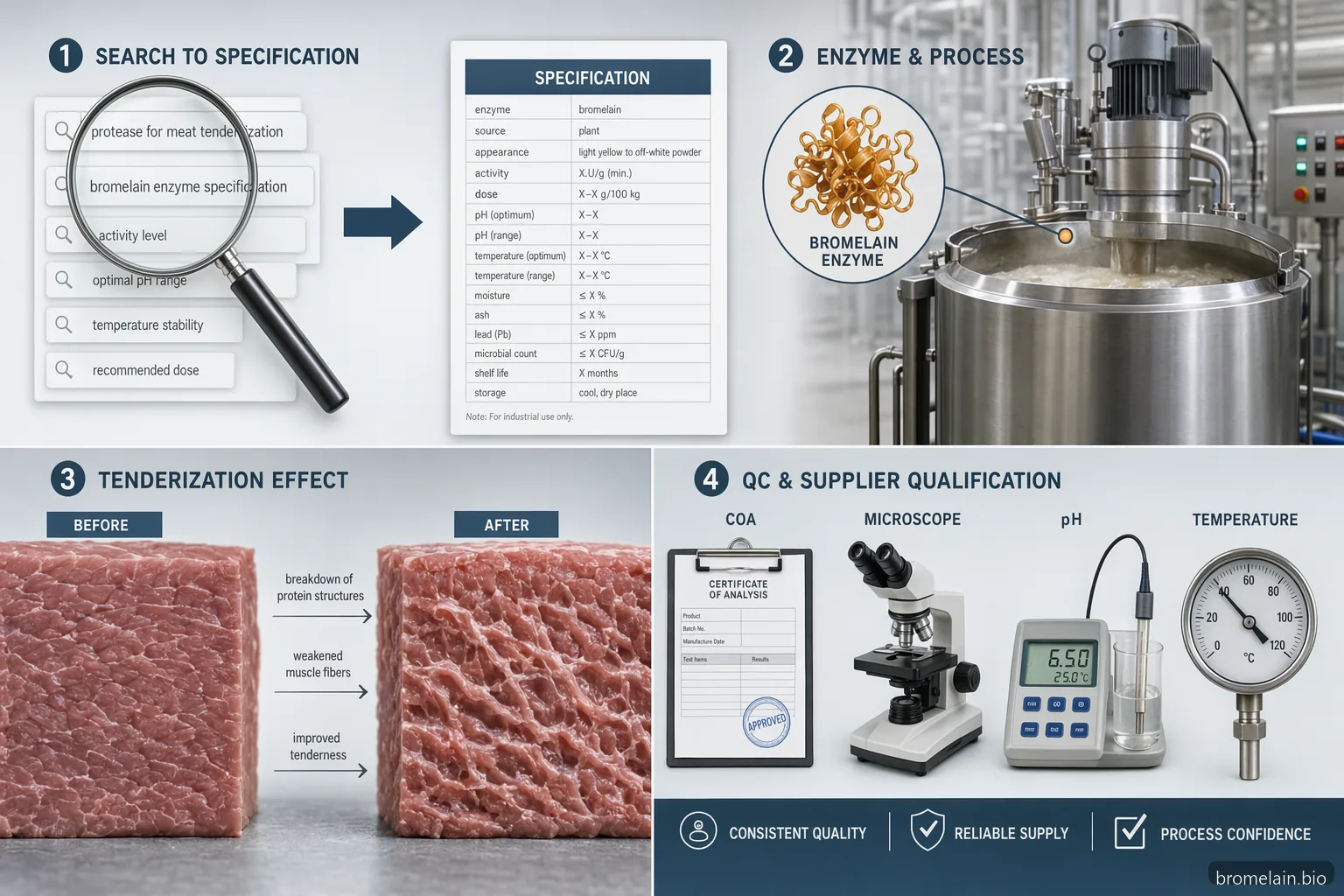
Industrial Buyer Context: From Search Term to Specification
Buyers may encounter the phrase silagen arnica-bromelain complex while researching bromelain, bromelain supplement formats, or what is bromelain. For meat processors, however, the relevant purchasing category is food-grade bromelain enzyme, not arnica blends or consumer supplement positioning. Bromelain is a proteolytic enzyme system derived from pineapple stem or fruit materials and used to hydrolyze muscle proteins under controlled conditions. In B2B meat tenderization, the target is predictable texture improvement without mushiness, yield loss, off-notes, or label surprises. A proper supplier discussion should translate search language such as bromelain nedir, bromelain wirkung, or pineapple enzyme into measurable industrial parameters: enzyme activity units, dose response, pH tolerance, temperature profile, carrier system, solubility, microbiological limits, and regulatory suitability for the intended market. This distinction helps procurement, R&D, QA, and operations evaluate bromelain as a processing aid or ingredient within a validated manufacturing process.
Do not qualify supplement blends for meat processing without food-grade documentation. • Define the intended meat type, cut size, process time, and finished texture target. • Compare lots by activity and performance, not product name alone.
Process Conditions for Meat Tenderization
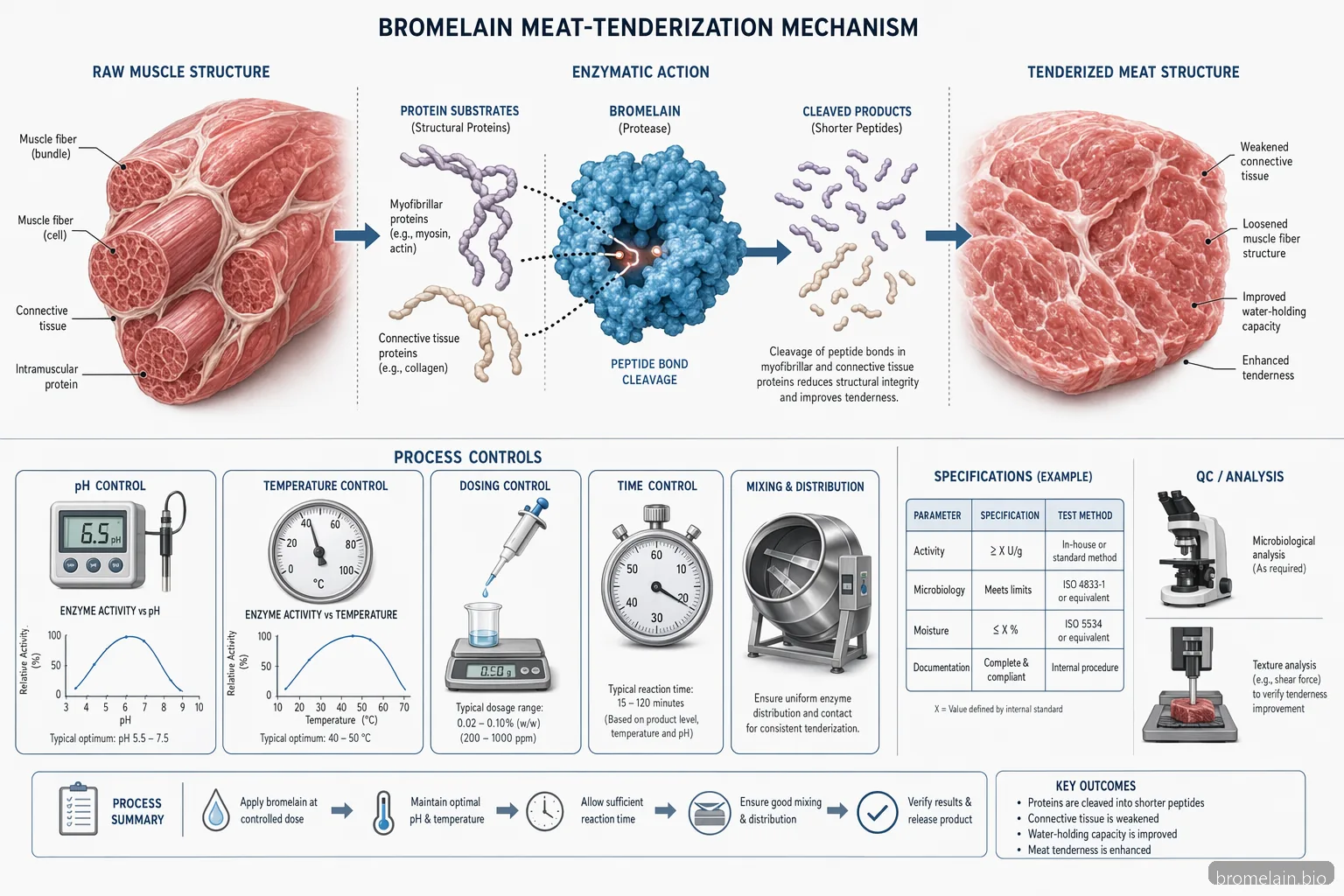
Bromelain is effective across mildly acidic to neutral meat systems, with practical trials often designed around pH 5.0–7.5. Activity generally increases as temperature rises, but meat quality and food safety constraints drive most applications toward chilled marination, vacuum tumbling, injection, or short ambient contact followed by controlled cooking. A safe pilot matrix may test 0.02–0.20% enzyme preparation by meat weight, adjusted for declared activity such as GDU, MCU, or an equivalent supplier method. Chilled processing at 2–8°C can support slower, more controllable tenderization, while 20–25°C contact may require shorter residence time and tighter microbial controls. Thermal inactivation is commonly achieved during cooking when the meat center reaches validated kill-step temperatures; processors should confirm residual activity if the product is par-cooked, sous-vide, or minimally heated. The correct endpoint is a repeatable bite, slice integrity, and water-binding profile, not simply maximum proteolysis.
Typical pH trial window: 5.0–7.5. • Common trial dosage: 0.02–0.20% enzyme preparation by meat weight. • Validate enzyme inactivation under the actual cook schedule. • Use lower doses or shorter contact for thin cuts and comminuted products.
Quality Documents and Supplier Qualification
A qualified bromelain supplier should provide a current certificate of analysis, technical data sheet, and safety data sheet for each commercial grade under review. The COA should identify lot number, enzyme activity, microbiological results, appearance, moisture or loss on drying where relevant, and any stated heavy metal or contaminant checks applicable to the grade. The TDS should explain recommended use levels, solubility, pH and temperature guidance, carrier composition, storage, shelf life, and handling precautions. The SDS supports worker safety and warehouse controls. For food processing, also request allergen statement, GMO status where needed, country of origin, ingredient declaration support, and traceability expectations. Avoid unverifiable claims and ask the supplier to define every activity unit method used. If two bromelain powders have different activity assays, direct kilogram pricing can mislead. Supplier qualification should include document review, sample evaluation, pilot run approval, lot-to-lot consistency checks, and commercial supply risk assessment.
Request COA, TDS, SDS, allergen statement, and traceability information. • Confirm activity method and units before comparing quotations. • Assess storage stability, packaging format, and minimum order quantity. • Approve suppliers through QA, procurement, and plant trial feedback.
Pilot Validation and QC Checks
Pilot validation converts bromelain theory into plant-specific evidence. Start with a control batch and at least three enzyme levels within the expected dosage band, keeping meat source, trim, brine, salt, phosphate status, tumbling time, temperature, and cook profile constant. Measure raw pickup, purge, cook yield, sliceability, texture, sensory bite, and visual structure. For whole muscle products, shear force or compression testing can support sensory panels. For injected or tumbled meat, monitor distribution uniformity and avoid localized over-tenderization near injection sites. QC should include incoming enzyme activity verification when feasible, lot COA review, storage temperature checks, and finished product trend data. Bromelain wirkungseintritt, or onset of effect, is process dependent: thin strips may respond quickly, while larger muscles require diffusion time. Validation should define maximum hold time before cooking, because extended contact can continue proteolysis and damage texture.
Run control, low, medium, and high enzyme-dose batches. • Track purge, cook yield, shear force, sliceability, and sensory bite. • Define maximum marination or holding time before heat inactivation. • Keep enzyme addition points and mixing energy consistent.
Cost-in-Use and Commercial Sourcing
The lowest bromelain price per kilogram is not always the lowest production cost. Cost-in-use depends on enzyme activity, effective dose, yield change, rework reduction, labor impact, sensory acceptance, and consistency across lots. A concentrated bromelain forte style grade may appear more expensive but can reduce dosage, freight, storage space, and dust exposure if it performs consistently. Conversely, a lower-activity grade may be suitable when gentle tenderization and broad dispersion are more important than potency. Procurement should compare landed cost per metric ton of treated meat at the validated dose, including any brine system changes, mixing time, and quality losses. Ask suppliers for representative samples from commercial stock, not only laboratory material. For ongoing supply, confirm lead times, batch size, packaging, shelf life, change-control notice, and technical support availability. The best supplier is one that helps maintain repeatable texture, compliant documentation, and predictable total processing cost.
Calculate cost per treated meat unit, not only enzyme cost per kilogram. • Include yield, rejects, texture consistency, and handling in the model. • Confirm commercial-scale availability before final formulation lock. • Require change notification for activity, carrier, or manufacturing changes.
Technical Buying Checklist
Buyer Questions
Bromelain is a pineapple-derived protease used to hydrolyze muscle proteins and improve tenderness under controlled processing conditions. In meat plants, it is evaluated as a food-grade enzyme by activity, dosage, pH, temperature, contact time, and texture endpoint. It should not be sourced as a bromelain supplement or arnica-bromelain blend unless the supplier can provide food-processing documentation and regulatory suitability.
Bromelain onset depends on dose, activity, meat geometry, pH, temperature, salt level, and distribution method. Thin strips or surface-treated products can change texture faster than whole muscles requiring diffusion. Chilled marination offers more control but slower action, while warmer contact accelerates proteolysis and microbial risk. Each plant should validate maximum hold time before cooking or inactivation.
For B2B food processing, the relevant concerns are not medical side effects but operational and quality risks. Excess dose or extended contact can cause mushy texture, poor sliceability, purge, or inconsistent bite. Buyers should also manage enzyme dust exposure, allergen documentation, sanitation compatibility, storage stability, and labeling requirements. Review the SDS and TDS before plant trials.
High-activity bromelain grades should be compared by validated cost-in-use, not label strength alone. Confirm the activity assay method, carrier, solubility, microbiological profile, and lot consistency. A stronger grade may reduce dose and freight but can increase the risk of over-tenderization if dosing control is poor. Run pilot trials at multiple levels before approving commercial use.
At minimum, request a current COA, TDS, SDS, allergen statement, traceability information, ingredient composition support, storage guidance, and shelf-life data. The COA should identify lot activity and key quality results. The TDS should describe process guidance such as pH, temperature, and recommended dosage ranges. Supplier qualification should also include sample testing and pilot validation.
Request a Free Sample and Quote
Tell us about your application and volume. We will send a free sample, COA, and competitive pricing within 24 hours.
Frequently Asked Questions
What is bromelain in meat tenderization?
Bromelain is a pineapple-derived protease used to hydrolyze muscle proteins and improve tenderness under controlled processing conditions. In meat plants, it is evaluated as a food-grade enzyme by activity, dosage, pH, temperature, contact time, and texture endpoint. It should not be sourced as a bromelain supplement or arnica-bromelain blend unless the supplier can provide food-processing documentation and regulatory suitability.
How fast is bromelain wirkungseintritt in a meat process?
Bromelain onset depends on dose, activity, meat geometry, pH, temperature, salt level, and distribution method. Thin strips or surface-treated products can change texture faster than whole muscles requiring diffusion. Chilled marination offers more control but slower action, while warmer contact accelerates proteolysis and microbial risk. Each plant should validate maximum hold time before cooking or inactivation.
What bromelain yan etkileri matter for industrial buyers?
For B2B food processing, the relevant concerns are not medical side effects but operational and quality risks. Excess dose or extended contact can cause mushy texture, poor sliceability, purge, or inconsistent bite. Buyers should also manage enzyme dust exposure, allergen documentation, sanitation compatibility, storage stability, and labeling requirements. Review the SDS and TDS before plant trials.
How should we compare bromelain forte or high-activity grades?
High-activity bromelain grades should be compared by validated cost-in-use, not label strength alone. Confirm the activity assay method, carrier, solubility, microbiological profile, and lot consistency. A stronger grade may reduce dose and freight but can increase the risk of over-tenderization if dosing control is poor. Run pilot trials at multiple levels before approving commercial use.
What documents are needed before buying bromelain enzyme?
At minimum, request a current COA, TDS, SDS, allergen statement, traceability information, ingredient composition support, storage guidance, and shelf-life data. The COA should identify lot activity and key quality results. The TDS should describe process guidance such as pH, temperature, and recommended dosage ranges. Supplier qualification should also include sample testing and pilot validation.
Related: Bromelain Enzyme for Meat Tenderization
Turn This Guide Into a Supplier Brief Request a food-grade bromelain specification review and pilot-trial sample for your meat tenderization process. See our application page for Bromelain Enzyme for Meat Tenderization at /applications/bromelain-meat-tenderization/ for specs, MOQ, and a free 50 g sample.
Contact